Buy aquasmartdata.eu ?
We are moving the project
aquasmartdata.eu .
Are you interested in purchasing the domain
aquasmartdata.eu ?
domain@kv-gmbh.de · 0541-91531010
Buy aquasmartdata.eu ?
What are water sounds?
Water sounds are the noises produced by water in motion, such as flowing, splashing, or dripping. These sounds can be calming and soothing, often associated with relaxation and tranquility. Examples of water sounds include waves crashing on the shore, rain falling, or a babbling brook. Many people find listening to water sounds to be therapeutic and use them for meditation or to help them fall asleep. **
Does ivy make water sounds?
No, ivy does not make water sounds. Ivy is a type of climbing plant that does not have any mechanisms to produce water sounds. Water sounds are typically produced by the movement of water, such as flowing in a stream or dripping from a faucet. Ivy may rustle in the wind, but it does not create water sounds. **

Similar search terms for Lights-and-Sounds-Answer
Top-Angebote
Products related to Lights-and-Sounds-Answer:




-
Are the warning lights and indicator lights acting up?
To determine if the warning lights and indicator lights are acting up, you should first check if they are illuminating when they shouldn't be or if they are not turning on when they should. Additionally, you can inspect the dashboard for any error messages or unusual behavior from the lights. If you notice any irregularities, it may indicate a problem with the vehicle's electrical system or a malfunctioning sensor, and it would be advisable to have the vehicle inspected by a qualified mechanic. **
-
Are northern lights and polar lights the same thing?
Yes, northern lights and polar lights are the same thing. They are also known as auroras, and they occur in the polar regions of the Earth. The northern lights are seen in the northern hemisphere, while the southern lights, or aurora australis, are seen in the southern hemisphere. These beautiful light displays are caused by charged particles from the sun interacting with the Earth's atmosphere. **
-
What sounds better and why?
This is a subjective question as what sounds better can vary from person to person. Some may prefer the sound of rain because it can be soothing and calming, while others may prefer the sound of waves because it reminds them of the beach and vacation. Ultimately, what sounds better depends on individual preferences and the context in which the sounds are experienced. **
-
What is the difference between plant lights and regular lights?
Plant lights are specifically designed to provide the spectrum of light that plants need for photosynthesis and growth, including both blue and red light wavelengths. Regular lights, on the other hand, are designed for general illumination and may not provide the specific light spectrum that plants require. Plant lights are also often more energy-efficient and longer-lasting than regular lights, making them a better choice for indoor gardening and hydroponic systems. **


What is the difference between tail lights and brake lights?
Tail lights are the red lights located at the rear of a vehicle that are always illuminated when the vehicle's headlights are on. They serve to make the vehicle more visible to other drivers, especially in low light conditions. Brake lights, on the other hand, are also red lights located at the rear of the vehicle, but they only illuminate when the driver applies the brakes. This signals to other drivers that the vehicle is slowing down or coming to a stop. In summary, tail lights are always on, while brake lights only come on when the brakes are applied. **
What is sensor technology and communication?
Sensor technology refers to the use of sensors to detect and measure physical properties such as temperature, pressure, light, and motion. These sensors can then communicate this information to other devices or systems through various communication methods such as wired connections, wireless signals, or the internet. This allows for real-time monitoring and control of physical environments, enabling applications in areas such as smart homes, industrial automation, healthcare, and environmental monitoring. Overall, sensor technology and communication play a crucial role in enabling the collection and transmission of data for various applications, ultimately leading to improved efficiency, safety, and convenience. **
Top-Angebote
Products related to Lights-and-Sounds-Answer:
-
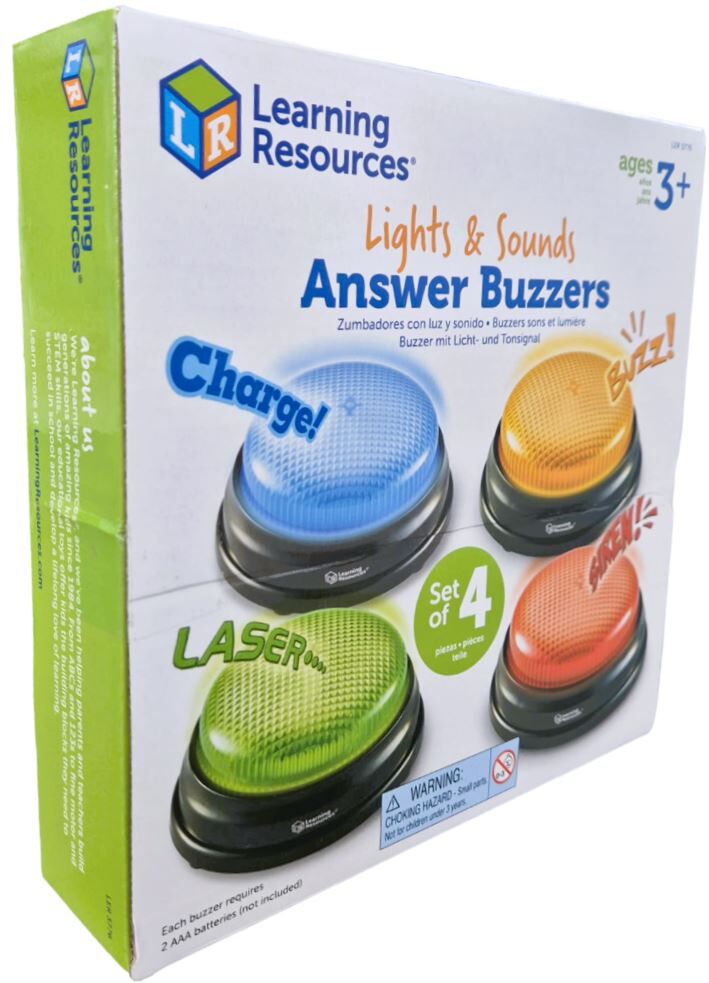
Lights and Sounds Answer Buzzers (Set of 4) By Learning Resources - Ages 3+ - Educational Toys Learning ResourcesLiven up any game with these colourful flashing answer buzzers! “Game-show” buzzers turn any lesson into a game Ideal for tests and quizzes Interaction actively engages students Buzzer buttons light up when pushed Four colours: blue, red, green and yellow Four sounds: siren, charge, laser and buzzer Buzzers measure 9cm D Set of four Each buzzer requires 2 AAA batteries, not included19,99 £*Shipping: 2,99 £Secure redirect to the provider
-
What are water sounds?
Water sounds are the noises produced by water in motion, such as flowing, splashing, or dripping. These sounds can be calming and soothing, often associated with relaxation and tranquility. Examples of water sounds include waves crashing on the shore, rain falling, or a babbling brook. Many people find listening to water sounds to be therapeutic and use them for meditation or to help them fall asleep. **
-
Does ivy make water sounds?
No, ivy does not make water sounds. Ivy is a type of climbing plant that does not have any mechanisms to produce water sounds. Water sounds are typically produced by the movement of water, such as flowing in a stream or dripping from a faucet. Ivy may rustle in the wind, but it does not create water sounds. **
-
Are the warning lights and indicator lights acting up?
To determine if the warning lights and indicator lights are acting up, you should first check if they are illuminating when they shouldn't be or if they are not turning on when they should. Additionally, you can inspect the dashboard for any error messages or unusual behavior from the lights. If you notice any irregularities, it may indicate a problem with the vehicle's electrical system or a malfunctioning sensor, and it would be advisable to have the vehicle inspected by a qualified mechanic. **
-
Are northern lights and polar lights the same thing?
Yes, northern lights and polar lights are the same thing. They are also known as auroras, and they occur in the polar regions of the Earth. The northern lights are seen in the northern hemisphere, while the southern lights, or aurora australis, are seen in the southern hemisphere. These beautiful light displays are caused by charged particles from the sun interacting with the Earth's atmosphere. **
Similar search terms for Lights-and-Sounds-Answer
-
What sounds better and why?
This is a subjective question as what sounds better can vary from person to person. Some may prefer the sound of rain because it can be soothing and calming, while others may prefer the sound of waves because it reminds them of the beach and vacation. Ultimately, what sounds better depends on individual preferences and the context in which the sounds are experienced. **
-
What is the difference between plant lights and regular lights?
Plant lights are specifically designed to provide the spectrum of light that plants need for photosynthesis and growth, including both blue and red light wavelengths. Regular lights, on the other hand, are designed for general illumination and may not provide the specific light spectrum that plants require. Plant lights are also often more energy-efficient and longer-lasting than regular lights, making them a better choice for indoor gardening and hydroponic systems. **
-
What is the difference between tail lights and brake lights?
Tail lights are the red lights located at the rear of a vehicle that are always illuminated when the vehicle's headlights are on. They serve to make the vehicle more visible to other drivers, especially in low light conditions. Brake lights, on the other hand, are also red lights located at the rear of the vehicle, but they only illuminate when the driver applies the brakes. This signals to other drivers that the vehicle is slowing down or coming to a stop. In summary, tail lights are always on, while brake lights only come on when the brakes are applied. **
-
What is sensor technology and communication?
Sensor technology refers to the use of sensors to detect and measure physical properties such as temperature, pressure, light, and motion. These sensors can then communicate this information to other devices or systems through various communication methods such as wired connections, wireless signals, or the internet. This allows for real-time monitoring and control of physical environments, enabling applications in areas such as smart homes, industrial automation, healthcare, and environmental monitoring. Overall, sensor technology and communication play a crucial role in enabling the collection and transmission of data for various applications, ultimately leading to improved efficiency, safety, and convenience. **
* All prices are inclusive of VAT and, if applicable, plus shipping costs. The offer information is based on the details provided by the respective shop and is updated through automated processes. Real-time updates do not occur, so deviations can occur in individual cases. ** Note: Parts of this content were created by AI.