Buy aquasmartdata.eu ?
We are moving the project
aquasmartdata.eu .
Are you interested in purchasing the domain
aquasmartdata.eu ?
domain@kv-gmbh.de · 0541-91531010
Buy aquasmartdata.eu ?
What does sustainability mean in geography?
In geography, sustainability refers to the ability of a system or environment to maintain ecological balance and function over time. It involves the responsible use of natural resources, the preservation of biodiversity, and the maintenance of ecosystem health. Geographers study the interactions between human activities and the environment, and seek to understand how to promote sustainable development and minimize negative impacts on the planet. This includes considerations of land use, water resources, climate change, and the overall health of the Earth's systems. **
Why is sustainability such a large area in geography?
Sustainability is a large area in geography because it encompasses the study of human-environment interactions, natural resource management, and the impact of human activities on the environment. Geography provides the spatial perspective needed to understand the distribution and utilization of resources, as well as the interconnectedness of different environmental systems. Additionally, geography helps to analyze the spatial patterns of environmental degradation, climate change, and the unequal distribution of environmental impacts on different communities. Overall, sustainability is a key focus in geography because it addresses the complex and interconnected challenges of environmental conservation and human well-being. **


Similar search terms for Geography
Top-Angebote
Products related to Geography:
-
Fox Eye Publishing Flowchart Explorers Earth Science 6 Book Set – Landforms, Water Cycle, Weather & STEM Geography CollectionUnderstanding earth science can be tricky, but flowcharts make it easy. Find out inside what earth science is, how it works, and how they impact the earth. Discover how earth science is at work everywhere on our planet!9,89 £*Shipping: 2,99 £Secure redirect to the provider
-
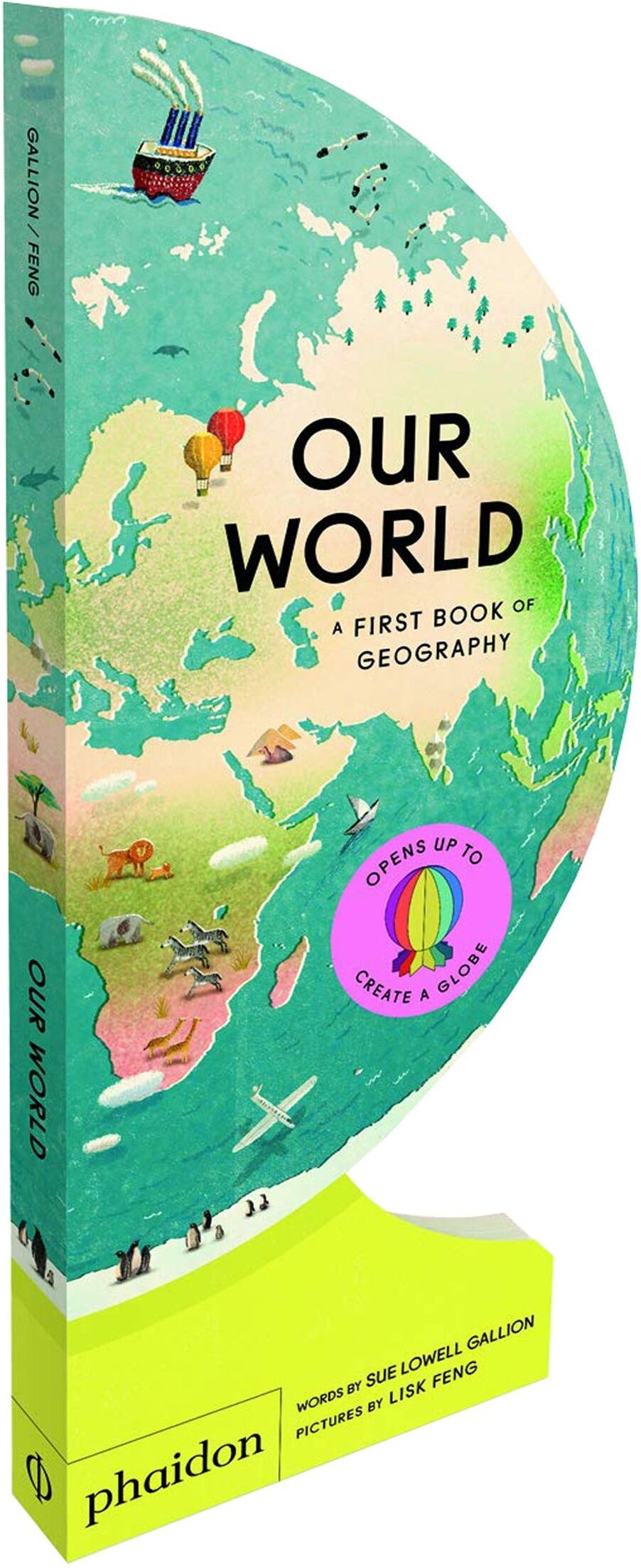
Phaidon Press Our World: A First Book of Geography by Sue Lowell GallionA read-aloud introduction to geography for young children that, when opened and folded back, creates a freestanding globe. Children are invited to identify and experience the Earth's amazing geography through rhyming verse and lush illustrations: from rivers, lakes, and oceans deep, to valleys, hills, and mountains steep. Secondary text offers more detailed, curriculum-focused facts and encourages readers to consider their own living environments, making the reading experience personal yet set within a global backdrop. This informative homage to Earth is sure to inspire readers to learn more about their planet – and to engage with the world around them. For Children Aged 2–5.9,99 £*Shipping: 2,99 £Secure redirect to the provider
-
Retro World Globe Desk Decor Modern Geography Learning Globe For Kids & Home brown GlobeInspire curiosity and learning with a stylish globe that blends education with modern dcor. Designed for kids, students, and home spaces, this piece adds both knowledge and charm to any room. Its classic design makes it a perfect world globe for...101,98 $*Shipping: 0,00 $Secure redirect to the provider
-
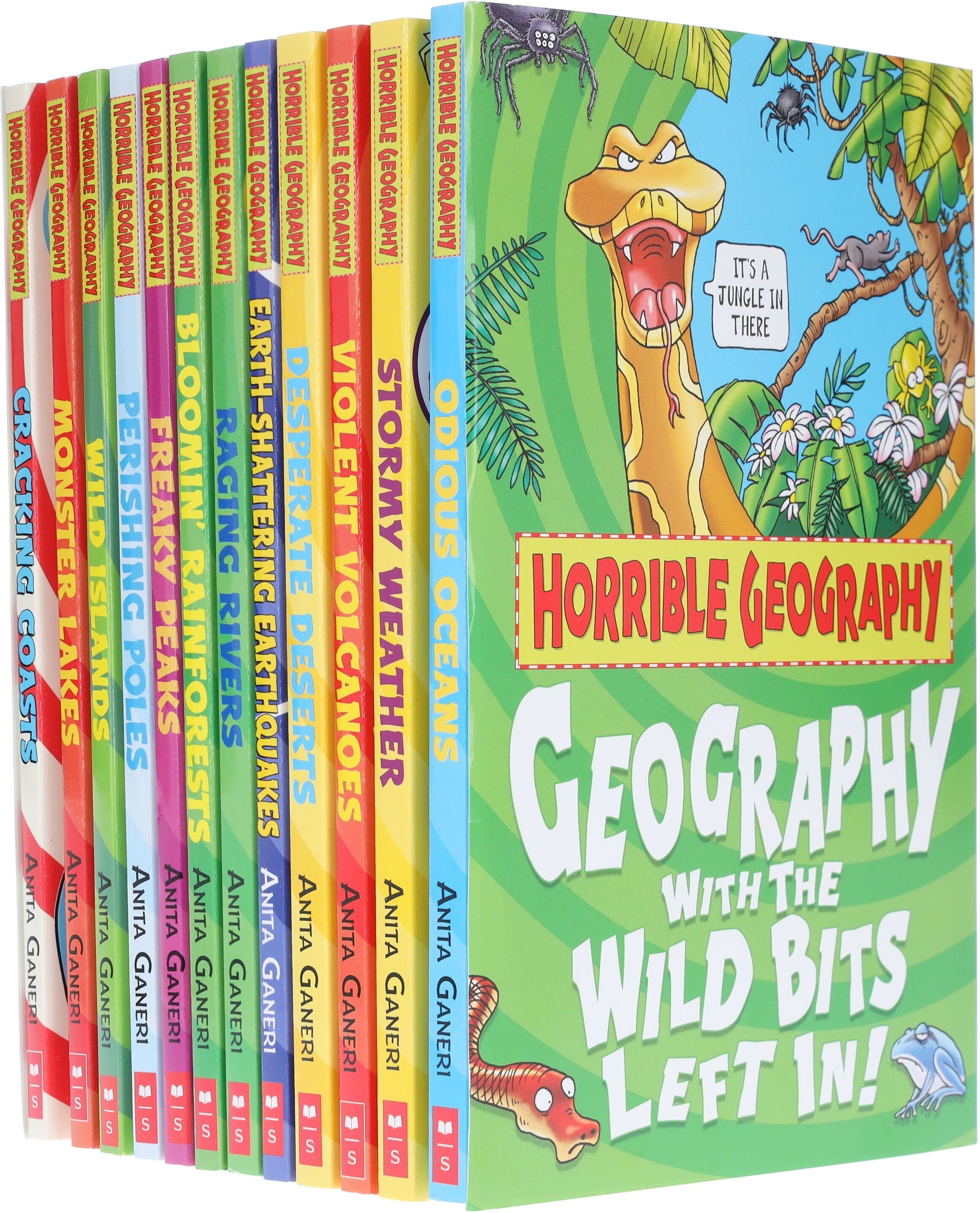
Horrible Geography Collection 12 Books Set By Anita Ganeri - Ages 9-14 - Paperback ScholasticDescription: From the publishers who brought you Horrible Histories and Horrible Science, leave the colouring pencils at home, as we take a trip through some Horrible Geography. This award-winning series is written by Royal Geographical Society member Anita Ganeri, and illustrated by Mike Phillips ( Horrible Histories: Gruesome Guides). For over twenty years Horrible Geography has taken the boring out of geological surveys, the dull out of drafting a map, and tedium out of tide tables. Horrible Geography will have you laughing out loud as you learn a thing or two at the same time. Packed with hilarious illustrations and great facts that will have you rushing to share them with others, this is the book to help you laugh at the world around you. Whether you want to find out about far-flung places, or a little more about your own patch, Horrible Geography drops facts as quickly as jokes. This fantastic series of books brings geography to life, while quizzes, puzzles and activities keep boredom at bay. This twelve book set features some of the best books in the series, from Odious Oceans to Cracking Coasts. Each is written by prolific children’s non-fiction author Anita Ganeri, and illustrated by the hilarious Mike Phillips. It’s the perfect set to support your child’s learning, and for children who haven’t previously gotten on with the subject. If you’re after more books that will make you laugh while you learn, check out the Murderous Maths series by Kjartan Poskitt. Feature Specification Author Anita Ganeri (Award-Winning Author and Fellow of the Royal Geographical Society) Illustrator Mike Phillips (Renowned Comic Art Specialist and Children's Caricaturist) Publisher Scholastic UK (London, United Kingdom) ISBN-13 9781407164991 (The Definitive 12-Volume Library Master Core) Format Multi-Book Value Paperback Curation inside Custom Heavy-Duty Slipcase Case Total Book Count 12 Independent, Fact-Packed Graphic Chapter Books Titles Included 1. Violently Volcanoes 2. Stormy Weather 3. Raging Rivers 4. Odious Oceans 5. Earth-Shattering Earthquakes 6. Cracking Coasts 7. Perishing Poles 8. Desperate Deserts 9. Freaky Peaks 10. Bloomin' Rainforests 11. Monster Lakes 12. Wild Islands Target Age Range Ages 9 to 14 Years Old (Upper Key Stage 2 & Key Stage 3 Academic Core) Core Subject Focus Physical geography, weather systems, tectonic mechanics, climate patterns, global ecology Retail Pricing Edge Tremendous 66% direct warehouse savings off individual retail RRP totals (£19.99 vs £59.88) 2026 Strategic Focus Premier independent summer reading anchor and curriculum preparation pack launching next month Description: Odious Oceans Get your swim-suit ready, because we’re off to the beach! Well, nearly… we’re diving into the odious ocean for a thrill-packed dip. Freak out as you set sail on the Titanic’s final day! Take the test and see if you’re nautical enough to join the Navy! Shudder at the ships which mysteriously vanished in the Bermuda Triangle. And tremble...14,99 £*Shipping: 2,99 £Secure redirect to the provider


-
How can I explain that sustainability is related to geography?
Sustainability is related to geography because geography encompasses the study of the Earth's natural systems, resources, and human interactions with the environment. Understanding the distribution of natural resources, climate patterns, and ecosystems is crucial for implementing sustainable practices. Geography also plays a role in identifying areas that are vulnerable to environmental degradation and in planning for sustainable development. By considering the geographical context, we can better understand the interconnectedness of human activities and the environment, and work towards sustainable solutions that take into account the unique characteristics of different regions. **
-
How do you conduct a site analysis in geography?
In geography, conducting a site analysis involves gathering data and information about a specific location to understand its physical, environmental, and human characteristics. This typically involves conducting fieldwork to observe and document features such as topography, soil composition, vegetation, climate, and human activities. Maps, aerial photographs, and satellite imagery are also used to supplement the data collected on-site. The information gathered during a site analysis is then used to assess the suitability of the location for various purposes, such as urban development, conservation, or agriculture. **
-
What is the main question for spatial analysis in geography?
The main question for spatial analysis in geography is "Where?" Spatial analysis seeks to understand the distribution and arrangement of phenomena on the Earth's surface. By examining the spatial relationships between different variables, geographers can answer questions related to patterns, processes, and interactions within a specific geographic area. This analysis helps to uncover underlying trends, identify spatial disparities, and inform decision-making in various fields such as urban planning, environmental management, and public health. **
-
What is the guiding question for spatial analysis in geography?
The guiding question for spatial analysis in geography is "Where?" This question seeks to understand the location, distribution, and arrangement of various phenomena on the Earth's surface. By analyzing spatial patterns and relationships, geographers can gain insights into the interactions between human activities and the environment, as well as the impacts of these interactions on society and the landscape. Ultimately, the goal of spatial analysis in geography is to uncover the underlying spatial processes that shape our world. **


What is the connection between geography and water?
Geography and water are closely connected as water plays a significant role in shaping the physical landscape of the Earth. The presence of water bodies such as rivers, lakes, and oceans influences the formation of landforms such as valleys, canyons, and coastlines. Additionally, the distribution of water resources across different regions affects the climate, vegetation, and overall ecosystem. Furthermore, human settlements and economic activities are often influenced by the availability and accessibility of water, making it a crucial factor in geographical studies and analysis. **
What is a suitable presentation topic on sustainability in geography for the introductory year?
A suitable presentation topic on sustainability in geography for the introductory year could be "The Impact of Climate Change on Global Geography." This topic would allow students to explore how climate change is affecting various geographical features such as coastlines, ecosystems, and weather patterns. It would also provide an opportunity to discuss the importance of sustainable practices in mitigating the effects of climate change and preserving the Earth's natural resources. Additionally, this topic would help students understand the interconnectedness of geography and sustainability, and the role they can play in promoting environmental stewardship. **
Top-Angebote
Products related to Geography:
-
Kids Inflatable Globe Geography Toy Educational Beach Ball World Map Kids Inflatable Globe Geography Toy Educational Beach Ball World MapTurn playtime into discovery with this inflatable globe that makes learning feel active, visual, and fun. Designed for curious kids, parents, and teachers, this geography toy brings continents, oceans, and world exploration into everyday play....129,97 $*Shipping: 0,00 $Secure redirect to the provider
-
Worth Dying For, The Power of Geography & Prisoners of Geography By Tim Marshall 3 Books Collection Set - Non Fiction - Paperback Elliott & Thompson LimitedTitles in This Set: 1. Prisoners of Geography 2. Worth Dying For: The Power and Politics of Flags 3. The Power of Geography Description: Prisoners of Geography All leaders are constrained by geography. Their choices are limited by mountains, rivers, seas and concrete. Yes, to follow world events you need to understand people, ideas and movements - but if you don't know geography, you'll never have the full picture. If you've ever wondered why Putin is so obsessed with Crimea, why the USA was destined to become a global superpower, or why China's power base continues to expand ever outwards, the answers are all here. Worth Dying For: The Power and Politics of Flags When you see your nation’s flag fluttering in the breeze, what do you feel? For thousands of years flags have represented our hopes and dreams. We wave them. Burn them. March under their colours. And still, in the 21st century, we die for them. Flags fly at the UN, on the Arab street, from front porches in Texas. They represent the politics of high power as well as the politics of the mob. From the renewed sense of nationalism in China, to troubled identities in Europe and the USA, to the terrifying rise of Islamic State, the world is a confusing place right now and we need to understand the symbols, old and new, that people are rallying round. In nine chapters (covering the USA, UK, Europe, Middle East, Asia, Africa, Latin America, international flags and flags of terror), Tim Marshall draws on more than twenty-five years of global reporting experience to reveal the histories, the power and the politics of the symbols that unite us – and divide us. The Power of Geography Tim Marshall's global bestseller Prisoners of Geography showed how every nation’s choices are limited by mountains, rivers, seas and concrete. Since then, the geography hasn’t changed. But the world has. In this revelatory new book, Marshall explores ten regions that are set to shape global politics in a new age of great-power rivalry: Australia, Iran, Saudi Arabia, the UK, Greece, Turkey, the Sahel, Ethiopia, Spain and Space. Find out why Europe’s next refugee crisis is closer than it thinks as trouble brews in the Sahel; why the Middle East must look beyond oil and sand to secure its future; why the eastern Mediterranean is one of the most volatile flashpoints of the twenty-first century; and why the Earth’s atmosphere is set to become the world’s next battleground.26,99 £*Shipping: 2,99 £Secure redirect to the provider
-
Fox Eye Publishing Flowchart Explorers Earth Science 6 Book Set – Landforms, Water Cycle, Weather & STEM Geography CollectionUnderstanding earth science can be tricky, but flowcharts make it easy. Find out inside what earth science is, how it works, and how they impact the earth. Discover how earth science is at work everywhere on our planet!9,89 £*Shipping: 2,99 £Secure redirect to the provider
-
Phaidon Press Our World: A First Book of Geography by Sue Lowell GallionA read-aloud introduction to geography for young children that, when opened and folded back, creates a freestanding globe. Children are invited to identify and experience the Earth's amazing geography through rhyming verse and lush illustrations: from rivers, lakes, and oceans deep, to valleys, hills, and mountains steep. Secondary text offers more detailed, curriculum-focused facts and encourages readers to consider their own living environments, making the reading experience personal yet set within a global backdrop. This informative homage to Earth is sure to inspire readers to learn more about their planet – and to engage with the world around them. For Children Aged 2–5.9,99 £*Shipping: 2,99 £Secure redirect to the provider
-
What does sustainability mean in geography?
In geography, sustainability refers to the ability of a system or environment to maintain ecological balance and function over time. It involves the responsible use of natural resources, the preservation of biodiversity, and the maintenance of ecosystem health. Geographers study the interactions between human activities and the environment, and seek to understand how to promote sustainable development and minimize negative impacts on the planet. This includes considerations of land use, water resources, climate change, and the overall health of the Earth's systems. **
-
Why is sustainability such a large area in geography?
Sustainability is a large area in geography because it encompasses the study of human-environment interactions, natural resource management, and the impact of human activities on the environment. Geography provides the spatial perspective needed to understand the distribution and utilization of resources, as well as the interconnectedness of different environmental systems. Additionally, geography helps to analyze the spatial patterns of environmental degradation, climate change, and the unequal distribution of environmental impacts on different communities. Overall, sustainability is a key focus in geography because it addresses the complex and interconnected challenges of environmental conservation and human well-being. **
-
How can I explain that sustainability is related to geography?
Sustainability is related to geography because geography encompasses the study of the Earth's natural systems, resources, and human interactions with the environment. Understanding the distribution of natural resources, climate patterns, and ecosystems is crucial for implementing sustainable practices. Geography also plays a role in identifying areas that are vulnerable to environmental degradation and in planning for sustainable development. By considering the geographical context, we can better understand the interconnectedness of human activities and the environment, and work towards sustainable solutions that take into account the unique characteristics of different regions. **
-
How do you conduct a site analysis in geography?
In geography, conducting a site analysis involves gathering data and information about a specific location to understand its physical, environmental, and human characteristics. This typically involves conducting fieldwork to observe and document features such as topography, soil composition, vegetation, climate, and human activities. Maps, aerial photographs, and satellite imagery are also used to supplement the data collected on-site. The information gathered during a site analysis is then used to assess the suitability of the location for various purposes, such as urban development, conservation, or agriculture. **
Similar search terms for Geography
-
Retro World Globe Desk Decor Modern Geography Learning Globe For Kids & Home brown GlobeInspire curiosity and learning with a stylish globe that blends education with modern dcor. Designed for kids, students, and home spaces, this piece adds both knowledge and charm to any room. Its classic design makes it a perfect world globe for...101,98 $*Shipping: 0,00 $Secure redirect to the provider
-
Horrible Geography Collection 12 Books Set By Anita Ganeri - Ages 9-14 - Paperback ScholasticDescription: From the publishers who brought you Horrible Histories and Horrible Science, leave the colouring pencils at home, as we take a trip through some Horrible Geography. This award-winning series is written by Royal Geographical Society member Anita Ganeri, and illustrated by Mike Phillips ( Horrible Histories: Gruesome Guides). For over twenty years Horrible Geography has taken the boring out of geological surveys, the dull out of drafting a map, and tedium out of tide tables. Horrible Geography will have you laughing out loud as you learn a thing or two at the same time. Packed with hilarious illustrations and great facts that will have you rushing to share them with others, this is the book to help you laugh at the world around you. Whether you want to find out about far-flung places, or a little more about your own patch, Horrible Geography drops facts as quickly as jokes. This fantastic series of books brings geography to life, while quizzes, puzzles and activities keep boredom at bay. This twelve book set features some of the best books in the series, from Odious Oceans to Cracking Coasts. Each is written by prolific children’s non-fiction author Anita Ganeri, and illustrated by the hilarious Mike Phillips. It’s the perfect set to support your child’s learning, and for children who haven’t previously gotten on with the subject. If you’re after more books that will make you laugh while you learn, check out the Murderous Maths series by Kjartan Poskitt. Feature Specification Author Anita Ganeri (Award-Winning Author and Fellow of the Royal Geographical Society) Illustrator Mike Phillips (Renowned Comic Art Specialist and Children's Caricaturist) Publisher Scholastic UK (London, United Kingdom) ISBN-13 9781407164991 (The Definitive 12-Volume Library Master Core) Format Multi-Book Value Paperback Curation inside Custom Heavy-Duty Slipcase Case Total Book Count 12 Independent, Fact-Packed Graphic Chapter Books Titles Included 1. Violently Volcanoes 2. Stormy Weather 3. Raging Rivers 4. Odious Oceans 5. Earth-Shattering Earthquakes 6. Cracking Coasts 7. Perishing Poles 8. Desperate Deserts 9. Freaky Peaks 10. Bloomin' Rainforests 11. Monster Lakes 12. Wild Islands Target Age Range Ages 9 to 14 Years Old (Upper Key Stage 2 & Key Stage 3 Academic Core) Core Subject Focus Physical geography, weather systems, tectonic mechanics, climate patterns, global ecology Retail Pricing Edge Tremendous 66% direct warehouse savings off individual retail RRP totals (£19.99 vs £59.88) 2026 Strategic Focus Premier independent summer reading anchor and curriculum preparation pack launching next month Description: Odious Oceans Get your swim-suit ready, because we’re off to the beach! Well, nearly… we’re diving into the odious ocean for a thrill-packed dip. Freak out as you set sail on the Titanic’s final day! Take the test and see if you’re nautical enough to join the Navy! Shudder at the ships which mysteriously vanished in the Bermuda Triangle. And tremble...14,99 £*Shipping: 2,99 £Secure redirect to the provider
-
Modern Mode Marketplace Kids Inflatable Globe Geography Toy Educational Beach Ball World Map Kids Inflatable Globe Geography Toy Educational Beach Ball World MapTurn playtime into discovery with this inflatable globe that makes learning feel active, visual, and fun. Designed for curious kids, parents, and teachers, this geography toy brings continents, oceans, and world exploration into everyday play....129,97 $*Shipping: 0,00 $Secure redirect to the provider
-
Retro World Globe Desk Decor Modern Geography Learning Globe For Kids & Home golden GlobeInspire curiosity and learning with a stylish globe that blends education with modern dcor. Designed for kids, students, and home spaces, this piece adds both knowledge and charm to any room. Its classic design makes it a perfect world globe for...111,98 $*Shipping: 0,00 $Secure redirect to the provider
-
What is the main question for spatial analysis in geography?
The main question for spatial analysis in geography is "Where?" Spatial analysis seeks to understand the distribution and arrangement of phenomena on the Earth's surface. By examining the spatial relationships between different variables, geographers can answer questions related to patterns, processes, and interactions within a specific geographic area. This analysis helps to uncover underlying trends, identify spatial disparities, and inform decision-making in various fields such as urban planning, environmental management, and public health. **
-
What is the guiding question for spatial analysis in geography?
The guiding question for spatial analysis in geography is "Where?" This question seeks to understand the location, distribution, and arrangement of various phenomena on the Earth's surface. By analyzing spatial patterns and relationships, geographers can gain insights into the interactions between human activities and the environment, as well as the impacts of these interactions on society and the landscape. Ultimately, the goal of spatial analysis in geography is to uncover the underlying spatial processes that shape our world. **
-
What is the connection between geography and water?
Geography and water are closely connected as water plays a significant role in shaping the physical landscape of the Earth. The presence of water bodies such as rivers, lakes, and oceans influences the formation of landforms such as valleys, canyons, and coastlines. Additionally, the distribution of water resources across different regions affects the climate, vegetation, and overall ecosystem. Furthermore, human settlements and economic activities are often influenced by the availability and accessibility of water, making it a crucial factor in geographical studies and analysis. **
-
What is a suitable presentation topic on sustainability in geography for the introductory year?
A suitable presentation topic on sustainability in geography for the introductory year could be "The Impact of Climate Change on Global Geography." This topic would allow students to explore how climate change is affecting various geographical features such as coastlines, ecosystems, and weather patterns. It would also provide an opportunity to discuss the importance of sustainable practices in mitigating the effects of climate change and preserving the Earth's natural resources. Additionally, this topic would help students understand the interconnectedness of geography and sustainability, and the role they can play in promoting environmental stewardship. **
* All prices are inclusive of VAT and, if applicable, plus shipping costs. The offer information is based on the details provided by the respective shop and is updated through automated processes. Real-time updates do not occur, so deviations can occur in individual cases. ** Note: Parts of this content were created by AI.