Buy aquasmartdata.eu ?
We are moving the project
aquasmartdata.eu .
Are you interested in purchasing the domain
aquasmartdata.eu ?
domain@kv-gmbh.de · 0541-91531010
Buy aquasmartdata.eu ?
How does a tire pressure sensor work?
A tire pressure sensor works by monitoring the air pressure inside the tire. It is typically located inside the tire valve stem or attached to the rim. The sensor sends real-time data to a monitoring system in the vehicle, which alerts the driver if the tire pressure is too low or too high. This helps to ensure optimal tire performance, fuel efficiency, and overall safety on the road. **
Should run-flat tires or regular tires be used with TPMS (Tire Pressure Monitoring System)?
Run-flat tires can be used with TPMS, as they are designed to maintain their shape and functionality even when they have low or no air pressure. However, regular tires can also be used with TPMS, as the system is designed to monitor the air pressure in the tires and alert the driver if it falls below a certain level. Ultimately, the decision between run-flat tires and regular tires should be based on the specific needs and preferences of the driver, as well as the recommendations of the vehicle manufacturer. Both types of tires can work effectively with TPMS to help ensure safe driving conditions. **
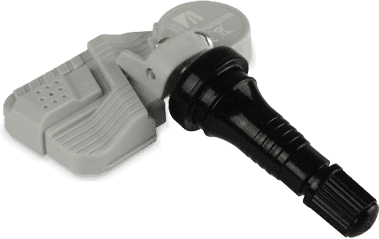

Similar search terms for TIRE-PRESSURE-SENSOR-TPMS
Top-Angebote
Products related to TIRE-PRESSURE-SENSOR-TPMS:
-
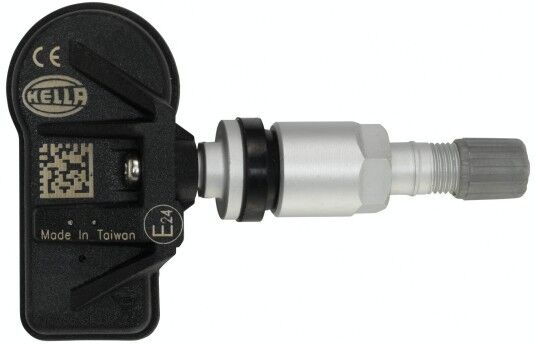
HELLA 6PP 358 139-301 Tyre pressure sensor (TPMS)Programmed: ; Tightening Torque [Nm]: 4; Assy./disassy. by qualified personnel required!: ; Construction Year from: 01/2008, 07/2011, 10/2007; Construction Year to: 10/2010, 04/2012, 08/2012; alternative OE number: 56029479AB; Country Specific Design: Europe43,99 £*Shipping: 8,45 £Secure redirect to the provider
-
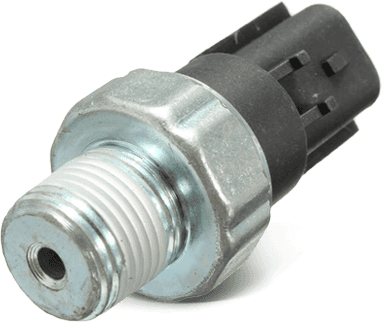
QUINTON HAZELL XOPT41 Oil pressure sensorThread Size: M10 x 1; Number of pins: 2; Length [mm]: 75; Width [mm]: 50; Spanner Size: 14; Height: 75; Weight [kg]: 0,15; Technical Information Number: Circuit N.O.; TecDoc Engine Number: 9384, 5537, 4988, 553626,99 £*Shipping: 0,00 £Secure redirect to the provider

-
Can I drive with regular tires even though my car has a tire pressure sensor?
Yes, you can drive with regular tires even if your car has a tire pressure sensor. The tire pressure sensor is designed to alert you when the tire pressure is low, but it does not require any specific type of tire to function. However, it is important to regularly check your tire pressure and ensure it is at the recommended level to maintain optimal performance and safety. **
-
What does the fuel low-pressure sensor do?
The fuel low-pressure sensor is responsible for monitoring the pressure of the fuel in the fuel system. It detects when the fuel pressure drops below a certain threshold, indicating that there may be an issue with the fuel system such as a leak or a clog. When the sensor detects low fuel pressure, it sends a signal to the vehicle's engine control unit (ECU) to alert the driver through a warning light on the dashboard. This helps prevent potential damage to the engine and ensures the vehicle operates efficiently. **
-
Why is the boost pressure sensor not working?
The boost pressure sensor may not be working due to a variety of reasons. It could be a result of a faulty sensor itself, a damaged or disconnected wiring harness, or a problem with the engine control module (ECM) that is not receiving the correct signal from the sensor. Additionally, the sensor may be clogged or contaminated with debris, affecting its ability to accurately measure the boost pressure. It is important to diagnose and address the specific issue causing the sensor to not work in order to ensure proper engine performance and efficiency. **
-
How does the air pressure sensor BMP280 work?
The BMP280 air pressure sensor works by measuring the pressure of the surrounding air. It uses a tiny, flexible silicon membrane to detect changes in pressure, and this membrane is connected to an electronic sensor. When the air pressure changes, the membrane flexes, causing a change in the electrical resistance of the sensor. This change in resistance is then converted into a digital signal by the sensor's internal circuitry, allowing the BMP280 to accurately measure the air pressure. **

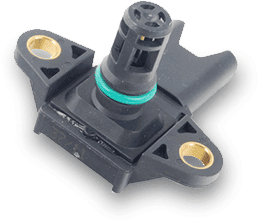
What does the low-pressure fuel sensor do?
The low-pressure fuel sensor is responsible for monitoring the fuel pressure in the fuel system of a vehicle. It detects any fluctuations or drops in fuel pressure and sends this information to the engine control unit. This data helps the engine control unit adjust the fuel delivery to ensure optimal engine performance and fuel efficiency. If the sensor detects a significant drop in fuel pressure, it can trigger a warning light on the dashboard to alert the driver of a potential issue. **
Is the pressure sensor of the AirPods Pro broken?
It is difficult to determine if the pressure sensor of the AirPods Pro is broken without further information or testing. If you are experiencing issues with the pressure sensor, it is recommended to contact Apple support or visit an authorized service provider for assistance. They can help diagnose the issue and provide a solution, whether it requires a repair or replacement of the sensor. **
Top-Angebote
Products related to TIRE-PRESSURE-SENSOR-TPMS:
-
SCHRADER 8001 Tyre pressure sensor (TPMS)Vehicle Equipment: for vehicles with tyre-pressure monitoring system; Supplementary Article / Supplementary Info Info 2: with groove, with valves; Permissible maximum speed [km/h]: 250; Valve colour: silver; Code Letter: 8001; Mounting Type: Bolted; Test Mark: CE6,99 £*Shipping: 8,45 £Secure redirect to the provider
-
SCHRADER 3182 Tyre pressure sensor (TPMS)Vehicle Equipment: for vehicles with tyre-pressure monitoring system; Supplementary Article / Supplementary Info Info 2: with groove, with valves; Permissible maximum speed [km/h]: 250; Housing Colour: black; Valve colour: silver; Valve stem material: Aluminium; Frequency Range [MHz]: 433; Code Letter: 3182; Mounting Type: Bolted; Test Mark: CE; Tightening Torque [Nm]: 6; Construction Year to: 04/2010, 03/2012, 10/2013, 09/2012, 08/2014, 01/2014, 06/2011, 06/2018, 09/2013, 12/2013, 12/2011, 06/2007, 12/2009, 12/2012, 12/2010, 09/2014, 08/2015, 10/2014, 03/2017; Construction Year from: 10/2010, 10/2008, 03/2010, 03/2011, 10/2007, 05/2005, 04/2008, 04/2007, 12/2006, 01/2008, 05/2012, 01/201121,99 £*Shipping: 8,45 £Secure redirect to the provider
-
HELLA 6PP 358 139-301 Tyre pressure sensor (TPMS)Programmed: ; Tightening Torque [Nm]: 4; Assy./disassy. by qualified personnel required!: ; Construction Year from: 01/2008, 07/2011, 10/2007; Construction Year to: 10/2010, 04/2012, 08/2012; alternative OE number: 56029479AB; Country Specific Design: Europe43,99 £*Shipping: 8,45 £Secure redirect to the provider
-
How does a tire pressure sensor work?
A tire pressure sensor works by monitoring the air pressure inside the tire. It is typically located inside the tire valve stem or attached to the rim. The sensor sends real-time data to a monitoring system in the vehicle, which alerts the driver if the tire pressure is too low or too high. This helps to ensure optimal tire performance, fuel efficiency, and overall safety on the road. **
-
Should run-flat tires or regular tires be used with TPMS (Tire Pressure Monitoring System)?
Run-flat tires can be used with TPMS, as they are designed to maintain their shape and functionality even when they have low or no air pressure. However, regular tires can also be used with TPMS, as the system is designed to monitor the air pressure in the tires and alert the driver if it falls below a certain level. Ultimately, the decision between run-flat tires and regular tires should be based on the specific needs and preferences of the driver, as well as the recommendations of the vehicle manufacturer. Both types of tires can work effectively with TPMS to help ensure safe driving conditions. **
-
Can I drive with regular tires even though my car has a tire pressure sensor?
Yes, you can drive with regular tires even if your car has a tire pressure sensor. The tire pressure sensor is designed to alert you when the tire pressure is low, but it does not require any specific type of tire to function. However, it is important to regularly check your tire pressure and ensure it is at the recommended level to maintain optimal performance and safety. **
-
What does the fuel low-pressure sensor do?
The fuel low-pressure sensor is responsible for monitoring the pressure of the fuel in the fuel system. It detects when the fuel pressure drops below a certain threshold, indicating that there may be an issue with the fuel system such as a leak or a clog. When the sensor detects low fuel pressure, it sends a signal to the vehicle's engine control unit (ECU) to alert the driver through a warning light on the dashboard. This helps prevent potential damage to the engine and ensures the vehicle operates efficiently. **
Similar search terms for TIRE-PRESSURE-SENSOR-TPMS
-
QUINTON HAZELL XOPT41 Oil pressure sensorThread Size: M10 x 1; Number of pins: 2; Length [mm]: 75; Width [mm]: 50; Spanner Size: 14; Height: 75; Weight [kg]: 0,15; Technical Information Number: Circuit N.O.; TecDoc Engine Number: 9384, 5537, 4988, 553626,99 £*Shipping: 0,00 £Secure redirect to the provider
-
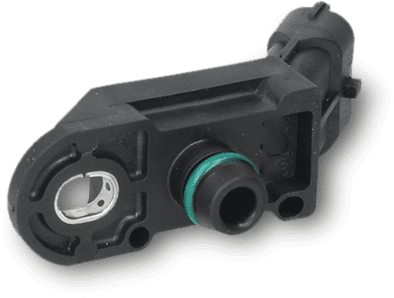
VDO 2803550409302 Intake manifold pressure sensorNumber of pins: 3; Pressure from [kPA]: 50; Pressure to [kPA]: 350; Construction Year from: 05/2010, 04/2007, 10/2010, 10/2006, 12/2011, 06/2014, 01/2013, 01/2009, 06/2009, 05/2009, 12/2015, 08/2014, 09/2016, 07/2015; Construction Year to: 06/2014, 12/2016, 12/2015, 12/2009, 12/2014, 11/2014, 08/2018; TecDoc Engine Number: 26543, 26771, 20708, 23502, 31477, 26252, 22207, 28582, 31670; not for emissions standard: Euro 6; Engine Code: M9R; for OE number: 82 00 685 36341,99 £*Shipping: 8,45 £Secure redirect to the provider
-
FAE 15036 Intake manifold pressure sensorNumber of pins: 4; Pressure from [kPA]: 11; Pressure to [kPA]: 307; Construction Year from: 11/2011, 01/2012, 01/2007, 01/2011, 09/2008, 09/2000, 08/1999, 05/2004, 07/2007, 07/2012, 07/2015, 03/2012, 09/2013, 02/2006, 03/2007, 04/2007, 10/2012, 09/2011, 06/2016, 09/2012, 11/2014, 01/2013, 04/2013, 11/2012, 09/2016, 09/2010, 02/2005, 03/2015, 01/2014, 06/2015, 10/2015, 01/2016, 05/2014, 04/2010, 09/2018, 08/2018; Vehicle Identification Number (VIN) from: C1., CG., C8., C3., C0000001, C1000001, C3000001, C8000001, CG000001, A1000001, B4000001, B6000001, C8., C3., C1., CG., 3V500001, C4000001, 32000001, 35000001, 36000001, 38000001, 3B000001, 3H000001, 4G000001, 848156, 42850, 49372; TecDoc Engine Number: 24379, 25743, 25259, 25742, 25879, 25880, 25877, 25878, 26319, 26688, 32415, 20931, 24265, 29257, 24745, 26478, 33181, 33182, 26479, 30309, 33178, 33179, 33180, 18653, 23550, 24588, 27226, 27831, 32762, 27989, 33419, 37141, 28541, 28542, 31077, 31078, 29612, 29721, 29722, 29723, 29724, 29490, 29491, 31331, 31332, 27833, 27834, 31015, 31016, 31418, 30816, 44191, 39491, 39492, 31853, 36119, 48873, 33469, 34151, 32304, 34138, 35217, 34975, 35421, 35324, 35214, 37581, 35216, 35727, 35377, 35543, 35261, 35267, 35710, 18671, 36225, 51533, 47656, 34570, 33185, 44620, 44621, 37529, 37527, 35262, 35263, 35264, 35265, 35266, 35712, 35713, 35268, 33187, 44527, 37664, 37666, 38781, 38782, 38783, 45384, 33161, 50075, 50081, 44236, 20240, 23574, 31856, 44073, 44074, 45856, 26941, 45751, 45793, 26225; Construction Year to: 06/2011, 08/2014, 12/2012, 08/2000, 03/2005, 06/2005, 04/2004, 05/2005, 05/2009, 12/2015, 12/2010, 12/2011, 06/2010, 12/2009, 09/2006, 10/2011, 12/2014, 06/2009, 05/2018, 12/2013, 05/2017, 04/2021, 02/2017, 12/2018, 11/2016, 12/2021; Required quantity: 1, 2; Vehicle Identification Number (VIN) to: 91999999, A4999999, A6999999, 297820, 357783, 197349, 402470, 306110, 99565; Emissions Standard: Euro 5, Euro 6, Euro 4 (D4), Euro 5+, Euro 6d; Fitting Position: Right, Lower, behind exhaust turbocharger, Charge Air Cooler; Engine Code: F30DT, VM39C, VM40C, B4204T20, B4204T51, C20HDTX, 670053476; for model code/type code: BK, C5, BL, C6, K8M1; Vehicle Production Country: Belgium, Sweden; alternative OE number: 77366837; Equipment Code: XE07, XE0D, XE0F, XA0F; Model Year to: 201838,49 £*Shipping: 8,45 £Secure redirect to the provider
-
Why is the boost pressure sensor not working?
The boost pressure sensor may not be working due to a variety of reasons. It could be a result of a faulty sensor itself, a damaged or disconnected wiring harness, or a problem with the engine control module (ECM) that is not receiving the correct signal from the sensor. Additionally, the sensor may be clogged or contaminated with debris, affecting its ability to accurately measure the boost pressure. It is important to diagnose and address the specific issue causing the sensor to not work in order to ensure proper engine performance and efficiency. **
-
How does the air pressure sensor BMP280 work?
The BMP280 air pressure sensor works by measuring the pressure of the surrounding air. It uses a tiny, flexible silicon membrane to detect changes in pressure, and this membrane is connected to an electronic sensor. When the air pressure changes, the membrane flexes, causing a change in the electrical resistance of the sensor. This change in resistance is then converted into a digital signal by the sensor's internal circuitry, allowing the BMP280 to accurately measure the air pressure. **
-
What does the low-pressure fuel sensor do?
The low-pressure fuel sensor is responsible for monitoring the fuel pressure in the fuel system of a vehicle. It detects any fluctuations or drops in fuel pressure and sends this information to the engine control unit. This data helps the engine control unit adjust the fuel delivery to ensure optimal engine performance and fuel efficiency. If the sensor detects a significant drop in fuel pressure, it can trigger a warning light on the dashboard to alert the driver of a potential issue. **
-
Is the pressure sensor of the AirPods Pro broken?
It is difficult to determine if the pressure sensor of the AirPods Pro is broken without further information or testing. If you are experiencing issues with the pressure sensor, it is recommended to contact Apple support or visit an authorized service provider for assistance. They can help diagnose the issue and provide a solution, whether it requires a repair or replacement of the sensor. **
* All prices are inclusive of VAT and, if applicable, plus shipping costs. The offer information is based on the details provided by the respective shop and is updated through automated processes. Real-time updates do not occur, so deviations can occur in individual cases. ** Note: Parts of this content were created by AI.